Analytical HUB - ESG and Climate Insights Platform
Client: Moody’s | Role: Principal Product Design
Opportunity for improvements
Moody’s analysts relied heavily on Excel-based scorecards and isolated calculation models to assess risk and generate forecasts. While accurate, these workflows were fragmented, manual, and difficult to audit or scale. Teams often created custom spreadsheets outside approved methodologies, resulting in inconsistent outputs, duplicated effort, and limited visibility across the organization.
The business needed to modernize this workflow into a unified web-based platform that would support complex analytical tasks, enforce governance, and enable teams to collaborate without disrupting existing processes.
Approach
I led end-to-end product design from discovery through delivery, partnering closely with product, engineering, and subject-matter experts.
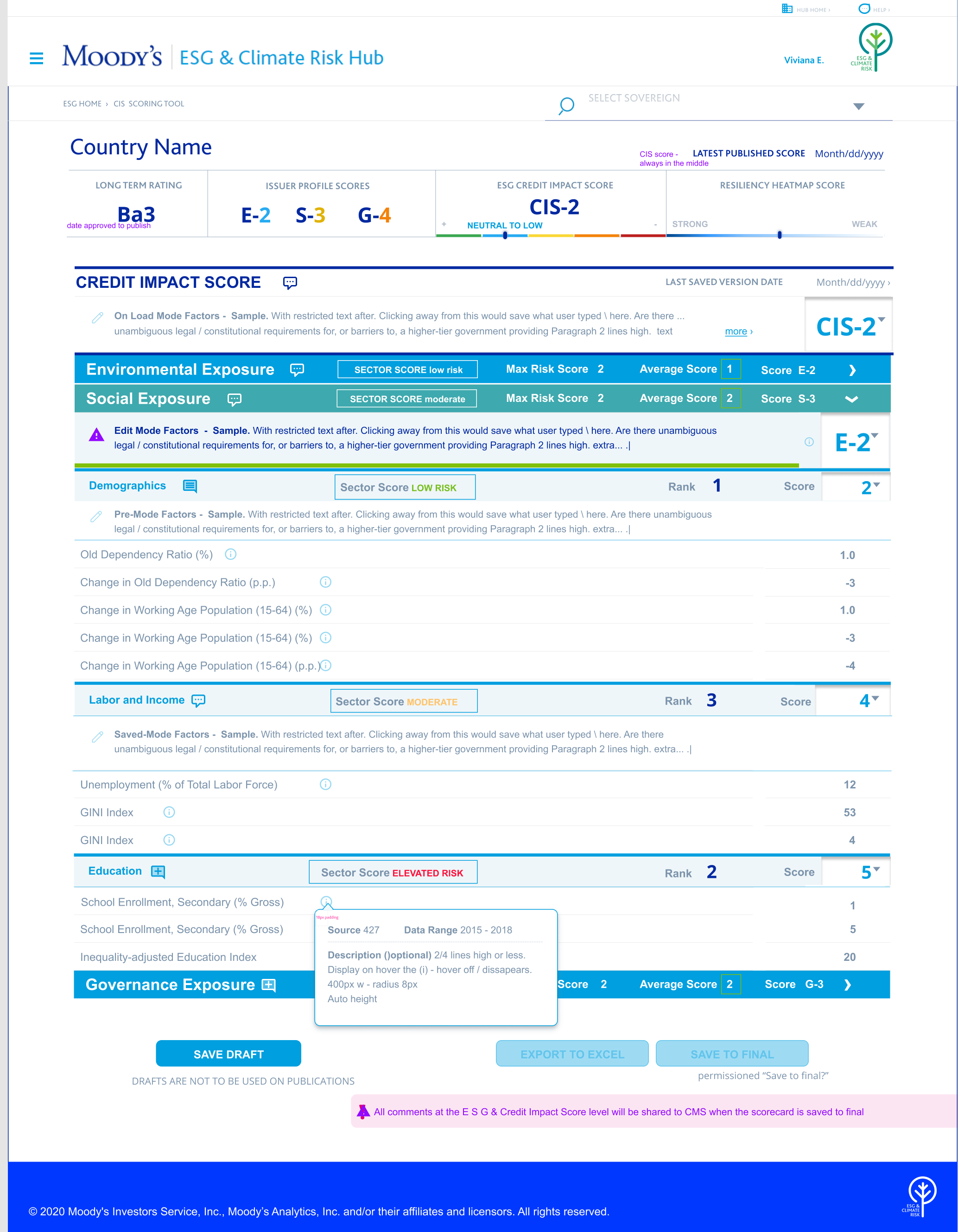
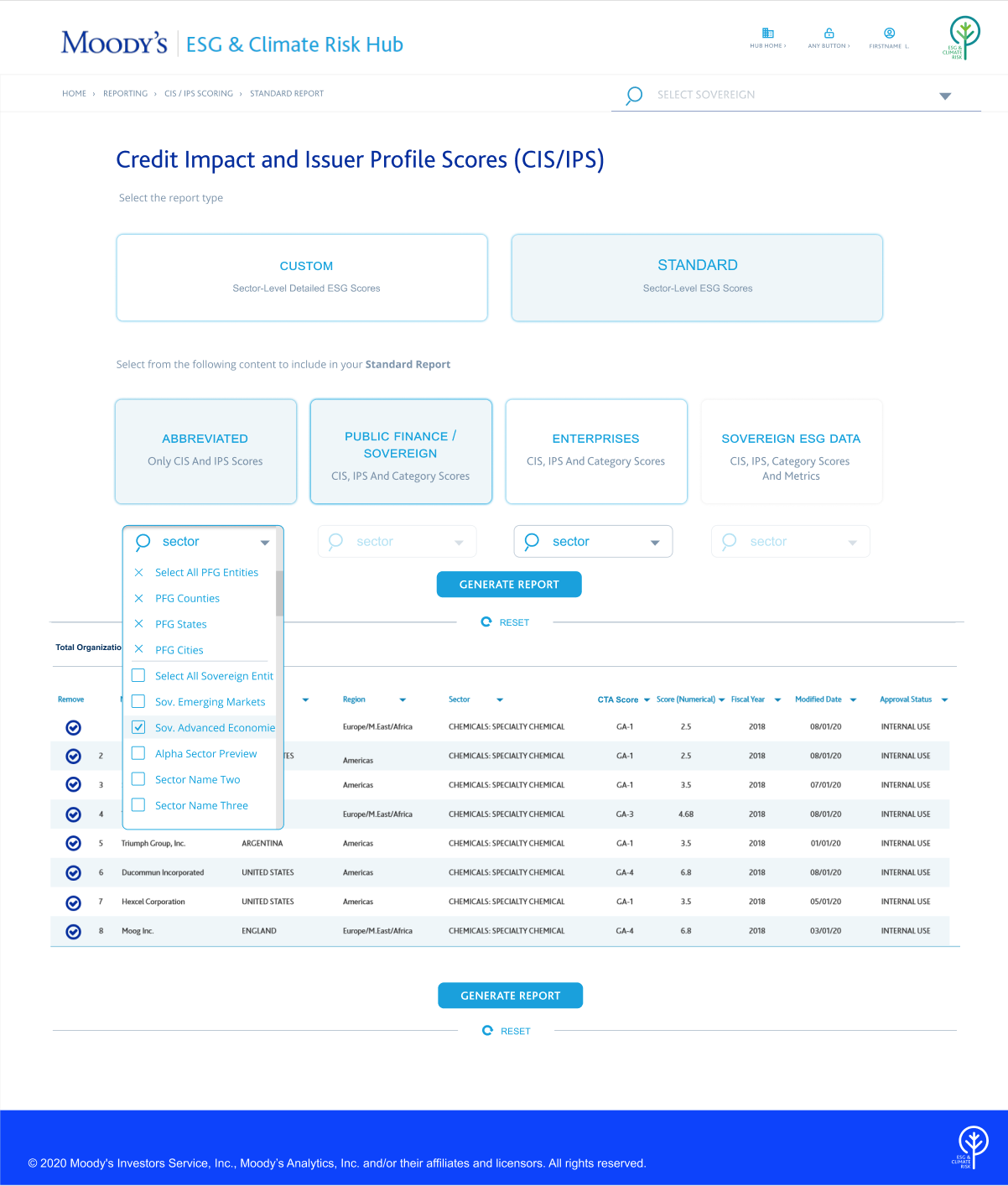
Prototype for sorting of data
Discovery & Strategy
Conducted requirements gathering and workflow mapping to understand analyst pain points, decision-making patterns, and dependencies across teams.
Defined the UX and product strategy for launching a net-new platform that translated legacy Excel workflows into intuitive, scalable digital experiences.
Aligned stakeholders on scope, guardrails, and success criteria, ensuring design decisions supported both business goals and regulatory requirements.
Experience Design & Systems Thinking
Designed the core interaction model for creating, editing, approving, and publishing scorecards within the platform, eliminating the need for external tools.
Introduced automation-ready visualizations, allowing users to generate and reuse insights consistently while maintaining methodological compliance.
Led the migration of Excel-based scorecards into structured web components, improving usability, auditability, and reuse.
Created the foundational UI components and interaction patterns that became the basis for the platform’s design system.
Design Operations & Enablement
Embedded Agile UX practices into the development workflow, enabling continuous iteration and tighter design–engineering collaboration.
Successfully advocated for and implemented Figma as the primary design and design system tool, replacing Axure to improve versioning, transparency, and handoff.
Trained designers and developers on using shared components and patterns, empowering teams to scale the product while maintaining design quality.
Authored governance and adoption documentation to support consistent rollout across distributed analyst teams.
Outcome
Transformed a fragmented, spreadsheet-driven workflow into a scalable, auditable web platform that supported consistent analytical practices across teams.
Reduced reliance on custom Excel files by enabling analysts to create, automate, approve, and publish scorecards directly in the platform.
Established the design foundation and system that enabled future teams to build and scale the product efficiently.
Improved cross-functional collaboration by introducing modern design tooling and shared processes, accelerating delivery and reducing rework.
Positioned design as a strategic partner in a highly technical and regulated environment, influencing both product direction and organizational workflows.